
How God Forms Leaders: Lessons from Moses on Character, Calling, and the Wilderness

What does it really take to lead God’s people well? The story of Moses offers a surprisingly honest answer. Before Moses ever stood before Pharaoh, before he parted the Red Sea, God spent decades forming Him in places He never would have chosen for Himself.
Why Character Matters More Than Calling
Moses grew up in Pharaoh’s household. He had power, position, and influence. And when he saw an Egyptian beating a Hebrew slave, he did what Egypt had taught him to do. He used force. He killed the man and hid him in the sand.
He saw the injustice. That part was right. But his character had not yet caught up with his calling.
This is what happens when calling comes before character. The desire to do something good is there, but the formation to do it God’s way is not. Moses dealt with the problem the only way he had ever seen it handled. That is the way of Egypt.
What the Bible Says About the Qualities of a Shepherd
When Paul writes to Timothy about what to look for in an overseer, he leads with character. Not credentials. Not accomplishments. Character.
“Now the overseer is to be above reproach, faithful to his wife, temperate, self-controlled, respectable, hospitable, able to teach, not given to drunkenness, not violent but gentle, not quarrelsome, not a lover of money.” – 1 Timothy 3:2-3 New International Version (NIV)
These are not a checklist of qualifications someone either has or does not have. These are qualities. They are things we grow into over time. No one is always gentle. No one is always self-controlled. But these are the traits God forms in us as we walk with Him.
The Difference Between Qualifications and Qualities
Calling someone’s character a list of “qualifications” can be misleading. Qualifications suggest a box you check once and move on. Qualities are different. They are developed. They are shaped through experience, failure, and faithfulness over time.
A shepherd also needs things that do not always make it onto a printed list: compassion, wisdom, discernment, prayerfulness, steadiness, and the ability to bear the burdens of others.
What Happens When Calling Outpaces Character
When responsibility outruns maturity, things collapse. Power and position do not create character. They reveal what is already there.
- Insecurity becomes control.
- Pride becomes arrogance.
- Anger becomes intimidation.
- Private compromises lead to public consequences.
Skill cannot replace character. Results cannot replace faithfulness. Character is revealed on the mountaintop, but it is formed in the valleys and the dark places.
How God Used the Wilderness to Form Moses
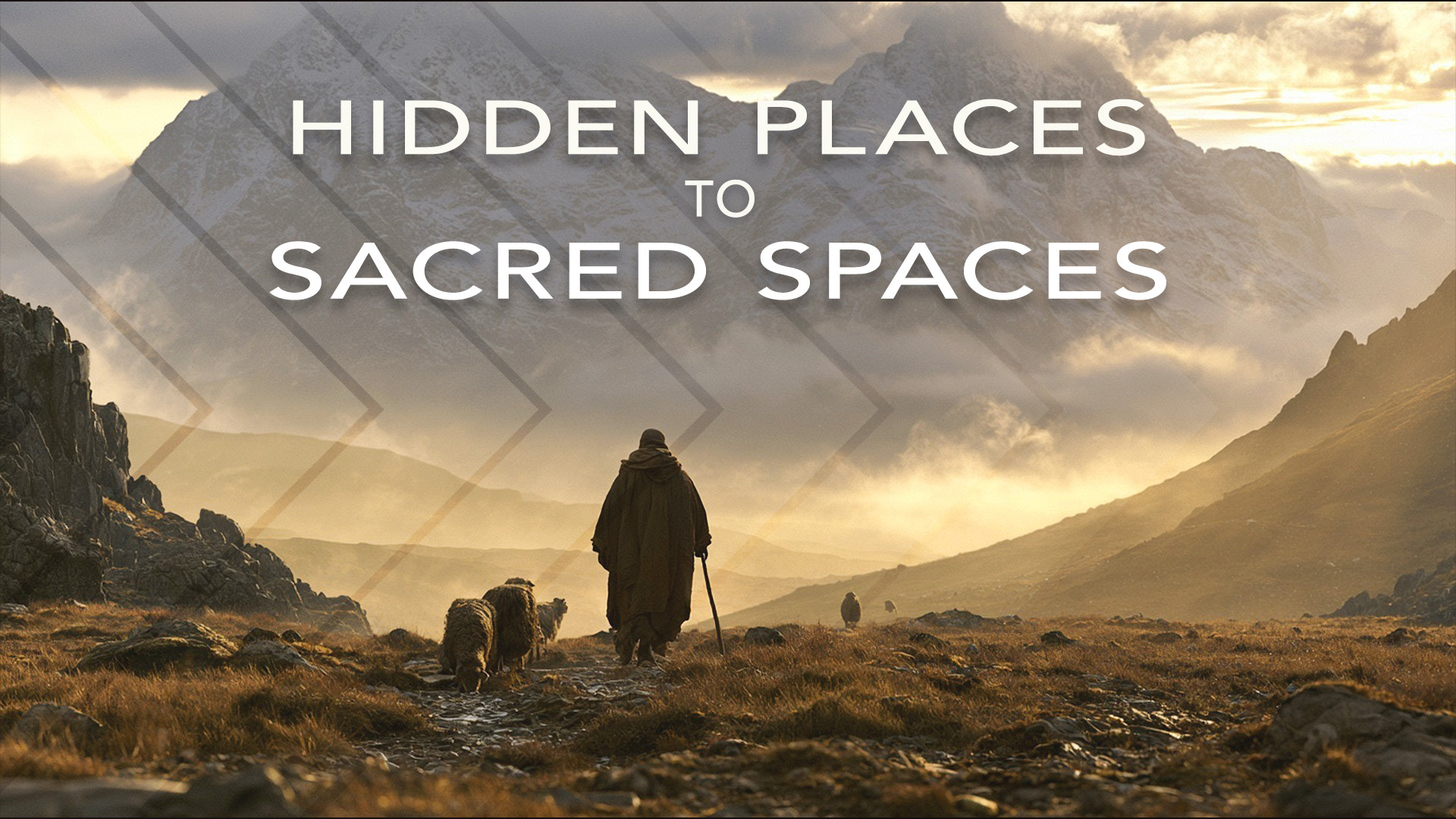
After Moses fled Egypt, He spent 40 years in Midian. No title. No platform. No audience. Just a flock that was not even his own, belonging to his Father-in-law Jethro.
But something changed in those 40 years. When Moses encountered injustice again at a well in Midian, he responded differently. He saw shepherds driving away the daughters of Jethro and he stepped in. But this time, he did not reach for a sword. He used his strength to serve, to protect, and to water their flock.
God was making a transition in Moses. From the way of Egypt to the way of a shepherd. From a sword to a staff.
God Forms Us in the Places We Are Most Reluctant to Go
The wilderness is not where anyone wants to be. But it is often exactly where God does His deepest work. The places that hurt, the seasons that feel like obscurity, the years when no one is watching. Those are the places that shape followers of Jesus more than any other.
Before Moses could lead Israel through the wilderness, God had to lead Moses through the wilderness first.
The Burning Bush: Learning to Turn Aside and See
When Moses encountered the burning bush, one of the most striking details is not that the bush was on fire and did not burn up. It is that Moses actually stopped to notice it.
“Now Moses was tending the flock of Jethro his Father-in-law, the priest of Midian, and He led the flock to the far side of the wilderness and came to Horeb, the mountain of God. There the angel of the Lord appeared to Him in flames of fire from within a bush.” – Exodus 3:1-2 New International Version (NIV)
In Egypt, Moses may never have slowed down enough to see it. But 40 years in the desert had formed in him the ability to notice, to turn aside, to pay attention to where God was present.
Every Person Is a Burning Bush
The ground was holy not because of the dirt beneath Moses’ feet, but because God’s presence was there. And that same presence dwells in every person we encounter. Every person carries the image of God.
The question is whether we are moving slowly enough to notice. Are we able to turn aside and see God’s presence in the people around us?
This is one of the most important things a shepherd can do. Walk slowly enough to notice. Help others see what they might be missing.
Who Am I? God’s Answer to Moses
When God called Moses to go back to Egypt and stand before Pharaoh, Moses’ response was simple: “Who am I?”
And God’s answer was not a list of reasons Moses was now ready. It was not a reminder of his training or his resilience. God simply said, “I will be with you.”
It does not matter who you are. It matters who God is. And He will go with you.
What True Shepherds Look Like in the Church
Many churches look for leaders the way the world looks for leaders. The outspoken. The successful. The ones who know how to get things done. But that is not how God chooses.
A true shepherd is already doing the work before anyone gives them a title. They are already caring for people, already carrying the staff, already turning aside to notice where God is at work.
The title does not make someone a shepherd. The shepherding makes someone a shepherd.
So many people carry wounds from churches where leaders led with a sword instead of a staff. Where power replaced gentleness and position replaced service. The call for every church is to get this right, to place the staff in the hands of those who are already holding it.
Life Application
This week, pay attention to the wilderness seasons in your own life. Instead of asking God to remove the hard place, ask Him what He is forming in you through it. The desert is not a detour from God’s plan. For Moses, it was the plan.
Also, practice turning aside. Slow down enough this week to notice where God is present in the people around you. Treat every conversation as holy ground.
Ask yourself these questions:
- Am I leading the people in my life with a staff or a sword? Am I serving through strength or controlling through force?
- What wilderness season am I in right now, and what might God be forming in me through it?
- Am I moving slowly enough to notice God’s presence in the people around me, or am I too busy to turn aside and see?
- Are the qualities Paul describes in 1 Timothy 3 things I am actively growing in, or have I stopped paying attention to my own character formation?
God is not looking for the most impressive. He is looking for the most formed. And He does that forming in the places we least expect.